



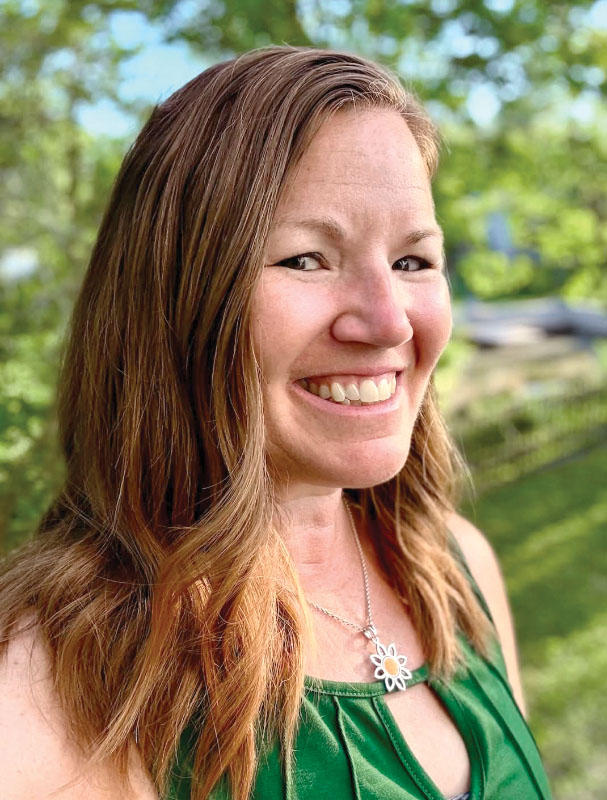
 Dr. Kris Fulkerson Most people in Clinton County know her simply as Dr. Kris.
Whether through her work as founder of Coping 4 Kids, co-founder of Coping 4 Life, or the countless hours she spends in local schools helping children and families navigate grief, trauma and mental health challenges, Dr. Kris Fulkerson has become a familiar face and trusted advocate throughout the community.
Now, she is sharing that passion on a broader stage with the release of her first book, “Grief in the Middle of Nowhere: Special Considerations for Rural Grieving Children.”
For Fulkerson, the book is deeply personal, and is “a work of heart” — especially based on the Clinton County community that she loves so much.
“I love our community,” she said. “Not only did I grow up here, but I came back because I couldn’t imagine a better place to raise my own kids.”
A Breese native, Fulkerson attended All Saints Academy and Central Community High School before moving away for about six years. She eventually returned home, where she and her husband, Jason, are raising their blended family of eight children — five girls and three boys.
Fulkerson founded Coping 4 Kids in 2011 before co-founding Coping 4 Life with Beth Ricciardi and Dr. Brie Overton in 2016.
Along the way, Fulkerson earned master’s degrees in Developmental Psychology and Social Work before returning to graduate school during the pandemic, in 2020. At the age of 46, Fulkerson completed her Doctorate in Social Work.
“Now I’m Dr. Kris to most folks,” she said.
Her mission has always been clear and consistent — ensuring grieving children are seen and heard, especially in underserved and rural areas.
Although Fulkerson praises Clinton County’s strong schools, supportive neighbors and safe communities, she said rural areas face significant challenges that often go unnoticed.
“With all the strengths of our community, we are still very much rural, and we have all the challenges that come with it,” Fulkerson said.
One of the most pressing is access to mental health care.
Clinton County is designated as a mental health provider shortage area, which means there are not enough mental health providers and professionals to meet the current needs of local residents.
“Every county around us is also designated a shortage area,” she said. “To get us where we need to be, there would have to be around 20 more mental health providers just for our county.”
She said the issue extends far beyond Clinton County and southern Illinois, and is in fact, like this across the country.
“Government and corporations have taken advantage of resources in rural areas but left our needs out of policy and funding priorities, and it shows in how rural people die at higher rates from all 10 of the top causes of death,” she said.
Those realities became painfully personal after the death of her first husband, Matt, from cancer, leaving her to navigate grief while raising young children.
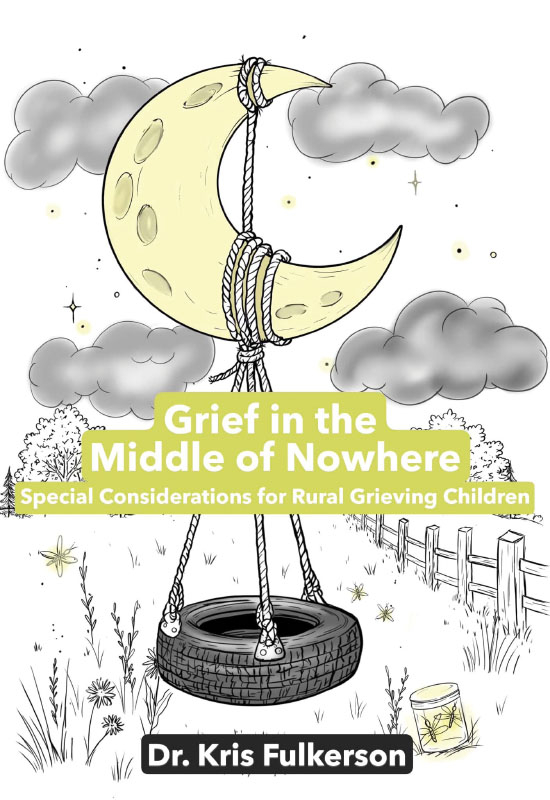 A cover of Dr. Kris Fulkerson's book, "Grief in the Middle of Nowhere: Special Considerations for Rural Grieving Children" is now available to order on Amazon.com.“I’m a social worker who specializes in children’s grief and trauma, but I was also a grieving mom,” she said. “Like too many rural grieving kids, there simply are not enough supports in place for kids like my own. That’s unacceptable.”
Fulkerson said too little attention has been given to the unique challenges rural families face after a death.
“Few people are even talking about the lack of resources in our rural communities. Also unacceptable,” she said. “So, I wrote the book to bring attention and begin this desperately needed conversation.”
The book centers the plight of grieving youth in rural areas through a compelling telling of real-life loss and jarring statistics.
“Through true personal stories illustrating the endless challenges of rural grief, the factual backdrop of the crisis facing rural grieving children becomes vividly apparent,” the synopsis of the book reads.
Fulkerson goes “beyond exploring the problem and offers a practical path forward that can transform the lives of bereaved rural youth.”
The idea of the book came unexpectedly in November 2024 while Fulkerson was in New York City presenting a live webinar for the National Alliance for Children’s Grief during Children’s Grief Awareness Day.
“I had been asked to speak for three hours about rural children’s grief,” she said. “It was in the midst of the webinar that someone asked for a book on rural children’s grief, and I realized there wasn’t one ... yet.”
She made a promise that day to write it. She told them she would write a book, and that is what she did the following year — in 2025.
“It took the whole year, but I did it,” she said.
Fulkerson said that the biggest obstacle of writing the book was believing that people would want to actually read what she wrote.
“Self-doubt is a beast! But I did it. I wrote a book. I wrote a book and people are reading it. Even saying those words seems surreal,” she said.
The book also became an extension of conversations she has been having online for years through Coping’s social media platforms.
“For years, I have written about my grief experiences on Coping’s social media to normalize grief and help others in rural communities know they are not alone,” she said. “This book feels like an extension of those posts.”
She hopes readers, especially those living in small towns and farming communities, feel understood.
“I hope rural people everywhere know their strengths and challenges are seen and there are people working to bring much-needed changes to help them,” she said.
Fulkerson went back to school at the end of the pandemic to dive into rural mental health issues.
“At that point, I had been a children’s grief therapist for almost 20 years and a rural practitioner for about eight years,” she said. “My knowledge and skills for supporting traumatized or grieving kids far outweighed my rural knowledge, so I decided to study rural mental health as I obtained my doctorate.”
Fulkerson said she really wanted the book to be accessible to everyone, but especially for rural people.
“We are creative problem solvers, and I firmly believe including rural people in the conversations around how to address the current crisis is key to reversing the current mortality trends,” she said.
Each chapter in the book begins with part of her own family’s grief journey before transitioning into research and practical solutions.
“The way I wrote it, each chapter opens with part of my own grief story to illustrate the toll the lack of resources takes on a regular rural family,” she said. “The second half of each chapter has the research and statistics to back up my ideas.”
She said reliving those memories proved to be the most difficult part of the writing process.
“The hardest part was reliving watching my husband and, later, my best friend die and then having to explain it to my children,” she said.
Still, Fulkerson believes those painful experiences have given her a voice that can help others.
For the woman many know simply as “Dr. Kris,” the book represents more than a professional accomplishment. It is a call for rural communities to be seen, heard and included in shaping the future of children’s mental health care.
“My hope,” she said, “is that rural folks not only know they’re seen and heard, but that they’ll join the conversation and help create solutions.”
“Grief in the Middle of Nowhere: Special Considerations for Rural Grieving Children” can be found on Amazon.com in Kindle, paperback or hardback formats.